By Alejandra Paladino, REALTOR® | Moving to Arizona
The internet is full of Arizona moving guides. Most of them cover the basics it's sunny, it's cheaper than California, the schools in Gilbert are excellent, summers are hot. You've read those articles. You know the talking points.
This is not that article.
This is the list of things that actually surprise people after they move to Arizona the things their research didn't prepare them for, good and bad. The things long-term residents wish someone had told them before they arrived. The things that change how you live, spend money, maintain your home, interact with your neighbors, and feel about the decision you made.
I've helped hundreds of people relocate to Arizona. Here's what they consistently tell me they didn't see coming.
 The Good Surprises
The October Reveal Will Probably Make You Emotional
If you move to Arizona in the summer or if you've only visited during summer you will not understand what you chose until October arrives. And when it does, the reaction is almost universal: people get emotional. Not sad emotional. Grateful emotional.
October in Arizona is one of the most beautiful months of weather you will ever experience in your life. Highs in the mid-70s. Crystal-clear desert skies that turn pink and orange at sunset. The ability to eat dinner outside at 7 PM in October. The ability to hike at noon in October. The ability to have coffee on the patio in a light sweater in October. After four months of behavioral adaptation to extreme heat, the arrival of perfect desert autumn feels like a gift.
Most long-term Arizona residents describe October as one of their favorite months of the year anywhere, ever. Nobody told them that. They discovered it. And it's one of the primary reasons people who were unsure about their decision in July become enthusiastic advocates by November.
The Monsoon Season Is Spectacular Not Scary
People who haven't lived in Arizona often hear "monsoon season" and picture flooding, destruction, and danger. What most people actually experience is one of the most visually extraordinary weather phenomena available anywhere in the United States.
Arizona's monsoon season runs from mid-June through September and brings dramatic afternoon and evening thunderstorms that roll in from the south with lightning shows that light up the entire sky. The smell of desert rain on hot pavement petrichor is one of the most distinctive and beloved sensory experiences of Arizona life. The desert turns green within days of a monsoon storm. The saguaro cactus absorbs so much water that they swell visibly. The sunsets after monsoon storms are genuinely the most spectacular most people have ever seen.
Long-term residents describe monsoon season as one of the things they love most about Arizona life. Families with children describe it as one of their children's most vivid memories. The spectacular lightning shows, the drama of a desert storm arriving from miles away, the relief of rain after weeks of dry heat these are experiences that newcomers describe as completely unexpected and completely wonderful.
The honest caveat: haboobs dust storms that can precede monsoon fronts are real and require standard precautions (pull over if driving, close windows and doors at home). Flash flooding in washes and low-lying areas is real during intense storms. "Never drive into flooded washes" is a rule that every Arizona resident should internalize. But the idea that monsoon season is primarily a threat rather than an experience is a mischaracterization that short-changes one of Arizona's most genuinely wonderful seasonal features.
Your Outdoor Life Will Be More Active Than It Was in California
This one surprises people who moved from California specifically. They assumed they were trading the outdoors of the Pacific Coast for a flat desert. What they found was Camelback Mountain, South Mountain, the McDowell Sonoran Preserve, the Superstition Wilderness, Usery Mountain, and the Salt River lakes all within reasonable distance of any Phoenix suburb.
The hiking culture in Phoenix is genuinely extraordinary. The trails are well-maintained, accessible from suburban trailheads, and range from family-friendly flat walks to serious technical climbs. The mountains are photogenic year-round. And the October-through-May hiking season is nine months of near-perfect trail conditions.
The broader access to outdoor recreation also surprises people Sedona is two hours away. Flagstaff and its ponderosa pine forests are two hours away. The Grand Canyon is two and a half hours away. The Salt River lakes for boating are 30 to 45 minutes from most Phoenix suburbs. Many California transplants who moved for financial reasons discover within their first year that Arizona's outdoor lifestyle actively exceeds what they had on the coast.
The Transplant Community Makes Social Integration Faster Than You Expect
One of the most consistent post-move surprises people describe is how quickly they build community in Arizona. This runs counter to the fear most people have before moving that leaving their California network means starting over socially in a city where they know nobody.
Because a large percentage of Arizona residents have recently relocated themselves, the social culture is specifically open to newcomers. People are genuinely interested in making connections because they know how isolating a fresh start can feel. The first time you mention at a neighborhood event that you moved from California, you will almost certainly meet three other people who did the same thing within the past two years.
Youth sports leagues, HOA community events, neighborhood Facebook groups, and the organized programming in master-planned communities like Power Ranch, Vistancia, and Harvest all create structured opportunities for community formation. Most people report building their Arizona social network meaningfully faster than they expected and more than one has told me they feel more connected to their Arizona community after two years than they ever felt in the California neighborhood they'd lived in for a decade.
Your Dog Will Become an Arizona Dog
This one is surprising in its specificity and universality. People who move to Arizona with dogs consistently describe a quality-of-life improvement for their pets that they didn't anticipate. Hiking trail culture extends to dogs most Phoenix-area trails are dog-friendly. The leash-law culture is strong (dogs must be kept on a leash in public) but the sheer number of dog-friendly trails, parks, and outdoor destinations gives Arizona dogs a more active life than their former California apartment or crowded suburban parks allowed.
The heat requires specific adjustments early morning and evening walks during summer, paw protection on hot pavement, water carried on all walks but most dogs adapt to the Arizona rhythm faster than their owners. Dog parks in established Phoenix suburbs are extensive and well-maintained. The outdoor culture of Arizona includes dogs at a level that surprises most newcomers.
The Surprising Trade-Offs (The Things That Cost More Than Expected)
Your Electric Bill in July Will Be Jarring Even If You Planned For It
Everyone who does their research knows Arizona summers are hot and electricity is expensive. Almost everyone still underestimates their first July electric bill.
Planning for $250 to $400 per month is the right range. What happens in practice is that buyers calculate that number, add it to their monthly housing cost, decide they can manage it and then receive a $420 bill in August for a home that's slightly larger than they planned for, or because they set the thermostat 3 degrees lower than they intended, or because the previous owner apparently had a much higher heat tolerance than they do.
The practical advice that consistent experience supports: budget $400 per month per summer month for a typical Phoenix metro home, regardless of what the estimate says. If you come in lower, great. The first summer is the learning year. The second summer you'll know exactly what your home costs to cool, and you can plan accordingly.
Budget for this before you commit to a mortgage payment. The buyers who get into financial trouble in Arizona are almost never unprepared for the home price they're unprepared for the summer utility reality that compounds the monthly housing cost.
Furniture and Cars Deteriorate Faster Than You Expect
The Arizona sun is extraordinary for mood and outdoor living. It's also relentlessly destructive to certain materials.
The intense Arizona sun fades fabric and leather. Outdoor furniture cushions left in direct sun year-round fade and break down faster than in any other climate most people have lived in. Car interiors particularly dashboards and leather or vinyl upholstery crack and degrade significantly faster in Arizona than in coastal climates.
Window tinting for your car, which is essentially universal among Arizona residents, is both a comfort and a preservation investment.
Houseplants and non-desert-adapted landscaping require specific attention the dry air and heat desiccate plants faster than you'd expect, and the UV intensity is extreme. The plants that thrived in your California home may not survive in an Arizona backyard unless they're specifically desert-adapted.
None of these are reasons not to move. But knowing that cars need to be parked in shade or garaged, outdoor furniture cushions need to be stored inside during peak summer, and UV protection for windows is worth the investment prevents surprise replacement expenses in years one and two.
HOA Fees Are Layered in Ways That Can Surprise Buyers
Read the HOA, CFD, and water disclosures before earnest money. Arizona's HOA layering can add hundreds of dollars per month that the listing photo doesn't show.
This is the most important financial surprise that catches buyers off guard. Many Phoenix metro master-planned communities have both a master association (covering community-wide amenities and infrastructure) and a sub-association (covering your immediate neighborhood amenities). Both charge separate fees. Both have their own CC&Rs. Both can levy special assessments.
Additionally, some Arizona communities particularly newer outer-edge developments have Community Facilities Districts (CFDs), which are essentially bonds that financed the public infrastructure of the community and are paid back through an annual assessment on property owners. CFD assessments can run $500 to $3,000 per year depending on the community and are not always prominently disclosed in listing materials.
During your inspection period, review all HOA documents including the resale disclosure package. Understand what master and sub-association fees are, whether a CFD assessment applies, and what the reserve fund status is. This is not complicated but it requires reading documents that many buyers skip, and the financial surprises that result from skipping them are entirely preventable.
The Valley Is Genuinely Enormous
Most people understand intellectually that the Phoenix metro is large. Most people do not understand experientially until they start driving it.
Phoenix proper covers approximately 500 square miles one of the largest cities by land area in the United States. Gilbert and Surprise are separated by more than 40 miles. A trip from Queen Creek to Peoria takes an hour under normal conditions. "Quick errand to Scottsdale" from west Peoria is not a quick errand.
The size of the metro affects your school choice, your social life, and your sense of community in ways that require adjusting expectations specifically. The person you meet at a neighborhood event who lives in Avondale is not going to be a casual coffee-on-a-weekday-morning friend unless one of you is willing to drive 45 minutes. Social community tends to form hyperlocally within your specific suburb, your specific master-planned community, your specific school PTA rather than across the valley.
This is not a problem once you understand it. But it's a genuine adjustment from California coastal cities or Midwest cities where "across town" means 20 minutes, not 60.
The Things About Arizona That Require Specific Behavioral Learning
Scorpions Are Real and They Require a Specific Response
Everyone has heard about scorpions before moving to Arizona. Almost nobody understands what living with them actually looks like until they've had their first encounter.
The practical scorpion reality that every Arizona resident develops:
Shake out shoes before putting them on especially shoes left outside or in the garage.
Never reach into dark spaces (closets, under furniture, garden beds) without looking first. Check the perimeter of your home at night with a black light during summer scorpions glow under UV, which makes the experience feel more like an adventure than a pest-control exercise. Keep your home tidy and reduce clutter, particularly in garages and storage spaces. Set up quarterly or monthly pest control service immediately when you move in this significantly reduces encounter rates. Keep children's bedrooms particularly free of clutter.
Bark scorpions the venomous species present in most Phoenix suburbs are dangerous for children and pets, and can cause serious symptoms in adults. This is not a casual footnote. It's a real safety concern that requires specific habitual behavior that Arizona residents develop quickly and maintain consistently.
The psychological adjustment to scorpions takes most people one summer. After that, it becomes part of the habitat awareness that Arizona residents carry naturally no different from the earthquake awareness California residents maintain or the hurricane preparedness Gulf Coast residents practice. You adapt. But adapting requires knowing what's coming.
Valley Fever Is Real and Worth Knowing About
Valley fever coccidioidomycosis is a fungal infection caused by inhaling spores of the Coccidioides fungus, which lives in desert soil throughout Arizona and the Southwest. Most people who contract it experience mild flu-like symptoms that resolve on their own. A minority develop more serious illness.
Valley fever is the thing many Arizona residents know about and most prospective newcomers don't. About 60% of people who contract valley fever don't get sick at all or have very mild symptoms. The rest experience flu-like symptoms. A small percentage develop serious pulmonary complications.
The practical guidance: people with compromised immune systems, diabetes, or who are pregnant face higher risk of serious illness from valley fever and should discuss the risk with their physician before moving. For most healthy adults, valley fever is a real but manageable background reality of Arizona desert life not a reason to avoid the state, but worth knowing about and discussing with a doctor when moving.
The Time Zone Situation Has Two Implications
Arizona does not observe Daylight Saving Time which means the state's time zone relationship with the rest of the country changes twice a year. During standard time (November through March), Arizona is on Mountain Standard Time same as Colorado, Utah, and New Mexico. During daylight saving time (March through November), Arizona is effectively on Pacific Time relative to California, meaning it's the same time as California despite being a Mountain Time state.
The implications for remote workers with California employers: during summer, you're in the same time zone as your California colleagues, which can make early East Coast calls easier to manage. During winter, there's a one-hour difference.
The implication for TV and sports schedules: broadcast times shift seasonally relative to Arizona. Monday Night Football starts at 5:15 PM in Arizona during Standard Time. Most Californians never bother to check this their first NFL Monday night they get home at 7 PM and wonder why the game is half over.
It becomes completely natural within one year. But the first adjustment period of remembering to check broadcast times rather than assuming them is a genuine small cognitive change.
The Desert Is Enormous, Diverse, and Not Flat
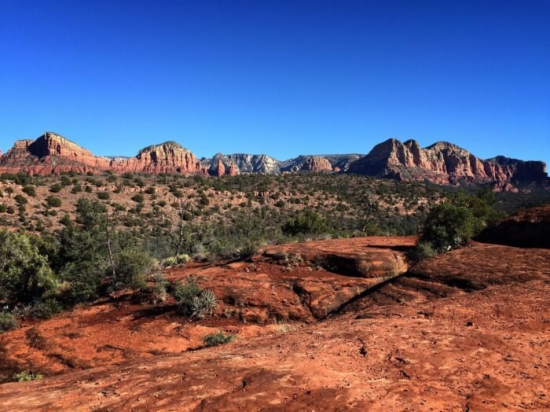
Most people picture Arizona as a flat, brown, featureless desert. The reality consistently surprises newcomers: the landscape is extraordinarily diverse, dramatically beautiful, and not particularly flat in most of the areas where people actually live.
While Arizona is widely-known for its desert landscapes, the northern end of the state is actually more mountainous and looks a lot like Colorado. The Phoenix metro specifically sits in a valley surrounded by mountain ranges visible from most neighborhoods the McDowell Mountains to the northeast, South Mountain to the south, the White Tank Mountains to the west, and the Superstition Mountains to the east. The visual character of the Phoenix landscape is dramatic and ever-changing in ways that flat desert imagery doesn't capture.
Driving north from Phoenix toward Flagstaff, the landscape transitions from Sonoran Desert to high-altitude ponderosa pine forest within two hours a transition that continues to surprise newcomers on their first Flagstaff day trip, and that makes the "it's just desert" assumption feel embarrassingly incomplete in retrospect.
The Things That Change How You Think About the Move Itself
Your First Year Is the Adjustment Year Not the Verdict
Almost every person who has moved to Arizona and stayed long-term describes their first summer as the hardest part of the move. And almost every person who has moved to Arizona and stayed long-term also says they would do it again.
The first summer is the adjustment year. The heat is more extreme than you expected. The sun beats on everything. Air conditioning is constantly on. You haven't yet developed the behavioral patterns early morning hikes, evening outdoor dining, Flagstaff escapes that make summer genuinely manageable. You haven't yet experienced October.
The residents who leave Arizona are disproportionately those who judge the move on the first summer experience rather than the full first year. The residents who stay are disproportionately those who gave themselves the full year to adapt, experienced October and November and December and January and February, and made their verdict with the full picture rather than the worst four months.
The honest advice that this pattern suggests: commit to a full year before reaching a conclusion. The move is a relationship with a place, and like most relationships, the first difficult period is not the most representative one.
The Financial Improvement Is Bigger Than You Calculated
Most people who research Arizona vs. California taxes and housing costs do the calculation. They know the numbers. And then they arrive and discover that the numbers were real and somehow still more impactful than the calculation suggested.
The first Arizona pacheck is a specific moment many California transplants describe: seeing their payroll deductions and realizing that their state tax withholding is a fraction of what it was. The first property tax bill is another moment $2,800 annually versus the California equivalent of $8,000 to $15,000 they were used to. The first month of utility bills outside of summer, when $100 covers everything.
The cumulative effect of financial breathing room money that isn't automatically consumed by the cost of living has a psychological impact that's harder to anticipate than the numbers themselves. People describe feeling less stressed, more able to make decisions from abundance rather than constraint, and more optimistic about their financial future in Arizona than they were calculating toward in California. The numbers were right. The feeling of living the numbers in daily life is something they didn't expect to be different from knowing them intellectually.
You Will Miss Certain Things And That's Okay
Almost everyone who moves to Arizona from California describes missing specific things from their former life. The ocean is the most commonly mentioned. The specific restaurants of their California neighborhood. The effortless social fabric of people they'd known for decades. The seasons even the people who claimed not to care about seasons sometimes find themselves missing the smell of rain in San Francisco or the way February felt in San Diego.
The experience of missing things is not evidence that the move was wrong. It's evidence that you had a life that mattered to you which is a good thing. And the experience of missing specific things coexists with the experience of gaining specific things that you also come to love. The October sunset over the McDowell Mountains. The January hike when your Chicago friends are buried in snow. The financial margin that lets you say yes to things California budget pressure prevented.
The transplants who seem most at peace with their Arizona lives are the ones who gave themselves permission to miss what they left while also genuinely embracing what they found. It's not an either-or proposition. Arizona doesn't require you to stop loving California to love Arizona. It just asks you to give it a genuine chance.
Frequently Asked Questions: What Nobody Tells You About Arizona
What do people regret most about moving to Arizona? The most common regret is underestimating the first summer. People who moved in June or July, without behavioral adaptation strategies in place, experienced the worst of Arizona before experiencing the best. Those who regret the move most often never got to October.
What is the biggest financial surprise about moving to Arizona? Summer electricity bills, HOA and CFD layered fees, and the cost of replacing furniture and car interiors that degrade faster in the Arizona sun. All are manageable with advance planning all are genuinely surprising without it.
Is valley fever something I should worry about before moving to Arizona? Most healthy adults contract mild or asymptomatic valley fever and recover without treatment. People with compromised immune systems, diabetes, or who are pregnant face higher risk. Discuss with your physician before moving if you have health conditions that may increase your risk.
Does Arizona have good food? Yes dramatically better than most people expect. The Sonoran Mexican food tradition is extraordinary and authentic in ways that California Mexican restaurants rarely match. The food scene in Phoenix, Scottsdale, and Tempe has arrived at a level that regularly surprises people who expected a culinary desert to match the geographic one. Tucson has a UNESCO-designated culinary heritage. The farm-to-table culture is genuine and growing.
Will I really miss the beach that much? The honest answer: most people miss it for the first year and then develop a different relationship with the absence. The beach becomes a deliberate trip rather than a casual afternoon and many residents find that deliberateness makes the trips themselves more meaningful. Rocky Point in Mexico is 3.5 hours away and genuinely beautiful. San Diego is 5 to 6 hours. The absence is real. The adaptation is also real.
Ready to Move to Arizona
The surprises are real good and bad. Going in with honest expectations rather than idealized ones is the single best predictor of satisfaction with an Arizona move. I help people understand all of this before they commit, not after.
If you want a conversation that gives you the real picture of what this move looks like call, text, or book a call and let's talk.
Alejandra Paladino REALTOR®
Call or Text: 480.382.0519
Email Me At: alejandra@azalejandra.com
Connect With Me (Buyer Form): bit.ly/BuyAZhome
Book a Free Call: https://zoomtoarizona.com
Discover homes at https://www.azalejandra.com
Follow Along for More Arizona Living Insights
YouTube Moving to Arizonafor in depth videos on neighborhoods, home buying tips, and Arizona lifestyle
Instagram @moving2arizona for daily content on Arizona living, real estate, and relocation tips
Thousands of people just like you have used my content to make a confident, informed decision about moving to Arizona.
Come join the community.
Tags: what nobody tells you about moving to Arizona, honest Arizona moving surprises, things people don't know about Arizona, moving to Arizona honest review, Arizona moving surprises 2026, what to expect moving Arizona, honest Arizona living, Arizona surprises new residents, moving to Phoenix honest, things I wish I knew before moving to Arizona, Arizona real talk 2026, moving to Arizona reality, scorpions Arizona moving, monsoon season Arizona surprise, Arizona electric bill surprise