By Alejandra Paladino, REALTOR® | Moving to Arizona
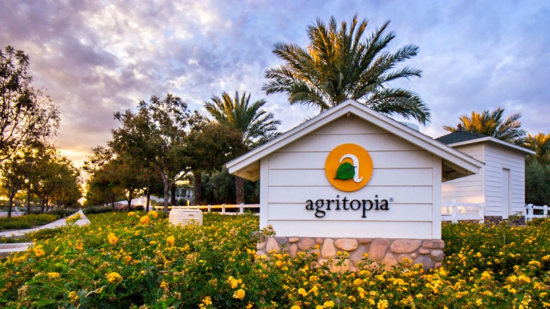
There is no neighborhood in Arizona quite like Agritopia and that is not marketing language. It is a simple statement of fact. Agritopia is the community that pioneered the "agrihood" concept before it became a national trend, that wrapped 452 homes around an 11-acre certified organic farm where residents can pick artichokes, tomatoes, peaches, and citrus steps from their front doors, and that managed to build a neighborhood with genuine community soul in the middle of one of the fastest-growing cities in the United States.
If you've seen photos of tree-lined streets with wide front porches, a farm stand in the middle of a neighborhood, and people actually walking to their local restaurant that's Agritopia. If you've heard people in Gilbert say "you really should check out this neighborhood" with genuine enthusiasm rather than generic boosterism they're talking about Agritopia.
This guide covers everything: the history, the homes, the amenities, the schools, the real estate market, and the honest trade-offs that help you decide whether Agritopia is the right fit for your life.
 The Story Behind Agritopia
Understanding Agritopia means understanding the Johnston family because without them, none of this exists.
The land that is now Agritopia was originally homesteaded by the Reber family. In 1960, Jim Johnston and his wife Virginia purchased the farm and built their family home on the land. Jim grew cotton and wheat. Their three sons Joe, Steve, and Paul grew up on the property, working the farm during summers and attending nearby schools. Steve and Paul went on to major in agriculture at the University of Arizona. Joe graduated from Stanford with an engineering degree.
By the late 1990s, Gilbert's explosive growth meant that suburban development was encroaching on the farm from all directions. The Johnstons faced the choice that most farming families in growing metros face: sell to a developer and watch the land become another generic subdivision, or find a different way forward.
Joe Johnston's engineering mind combined with a deep attachment to the land his family had worked for decades produced a genuinely different answer. Rather than selling the farm and walking away, the family designed a neighborhood built around preserving it. The concept: surround the farm with homes designed to interact with it, rather than replace it. Create streets where neighbors walk to each other. Build a restaurant sourced from the farm. Preserve the agricultural identity of the land while making it economically viable for the next generation.
The result 166 acres, 452 homes, 11 acres of certified organic farmland became one of the most referenced examples of intentional community design in American residential development. The Johnston family still owns and operates the farm. Descendants of the founding family still live in the community. The whole enterprise is built on a genuine idea rather than a developer's marketing concept, which is precisely why it works.
What Agritopia Actually Looks Like
The architecture alone signals that Agritopia is different. Homes in Agritopia feature Spanish-influenced, Craftsman, European Revival, and ranch-style designs no two homes look identical. Front porches are deliberately oversized, built to face the street and encourage the kind of neighborly interaction that standard suburban home designs actively discourage by facing everything toward the backyard. Tree-lined sidewalks connect the entire neighborhood on foot.
The streets are walkable in the truest sense not just designed for walking, but actually used for it. People walk to The Coffee Shop in the morning. They walk to Joe's Farm Grill for dinner. They walk to the farm stand to pick up vegetables. They walk their dogs past their neighbors' front porches and have actual conversations. This is not a hypothetical lifestyle it is what residents describe in review after review as the thing they love most about living here.
The community is organized around several distinct zones that serve different purposes. The residential streets radiate out from the farm at the center. The Epicenter at Agritopia the mixed-use commercial area anchors the walkable village experience. The Field House and Clubhouse provide athletic and recreational infrastructure. The farm itself, with its gardens and produce stands, sits at the heart of everything.
The Farm: The Heart of It All
The Agritopia Farm is not decoration. It is a working, certified organic farm that actively produces food year-round in Arizona's climate and engages residents in the process of growing it.
Over 11 acres are designated gardens and farm plots where residents can lease space, participate in educational programs about agricultural sciences and sustainability, and connect with the food being grown around them. The farm produces a wide range of seasonal produce artichokes, tomatoes, peaches, citrus, and much more depending on the time of year.
Farm Nights are held on the second Wednesday of the month from September through May community gatherings around good food and conversation with neighbors and local growers that have become one of the most beloved Agritopia traditions. Farm tours are held regularly throughout the year, giving residents and visitors a direct connection to the agricultural heritage of the land. The Farm Store sells fresh produce, apparel, and gifts.
The U-pick orchard gives residents the unusual experience of walking out their front door and picking fruit from trees that are literally part of their neighborhood. For families with children, this connection to where food comes from the physical, sensory, real experience of it is one of the most consistently described gifts of raising kids in Agritopia.
The Food and Social Scene: Joe's Farm Grill and Beyond
No description of Agritopia is complete without Joe's Farm Grill and Joe's Farm Grill cannot be adequately described without noting that it was featured on Guy Fieri's Diners, Drive-ins and Dives. That recognition captures something real: this is not a neighborhood restaurant that exists to serve residents. It is a genuinely excellent restaurant that draws people from across the metro to eat here, built from the Johnston family's original farmhouse, serving seasonal and rotating dishes sourced directly from the farm.
The Coffee Shop on Valencia Street is the neighborhood's morning ritual anchor a genuinely charming coffee shop where residents walk for caramel macchiatos and spend time before starting their days. In a suburban landscape where most coffee requires a car and a drive-through, having this walkable experience is something Agritopia residents describe with affectionate regularity.
Barnone is the community's artisan marketplace a dozen independent artisans operating workshops and studios in a space that includes wine, crafts, woodworking, and more. It functions as a hub for gifts, local products, and the kind of small business energy that most planned communities never manage to cultivate organically. The fact that it exists and thrives within Agritopia reflects the community's genuine commitment to local entrepreneurship rather than a curated aesthetic.
Buck and Rider a seafood restaurant drawing diners from across the Valley has joined the Epicenter at Agritopia's growing commercial corridor, further cementing the neighborhood's status as a dining destination rather than just a residential address.
Community Amenities: More Than You'd Expect
For a neighborhood of 452 homes, the community infrastructure at Agritopia is remarkably comprehensive.
The Agritopia Clubhouse anchors the community recreation experience with a resort-style outdoor heated pool and spa. Adjacent to the Clubhouse, the Field House provides fitness facilities, indoor athletic courts, and multipurpose fields for soccer, football, and other sports. A basketball court connects these facilities.
Six parks are distributed throughout the neighborhood, including four playgrounds parceled around the residential areas for easy foot access. Two volleyball courts including a sand volleyball court at the Clubhouse two basketball courts, and tennis and pickleball courts round out the outdoor recreational infrastructure. Cosmo Dog Park gives four-legged residents their own space.
The Crossroads District Park a 92-acre city park adjacent to the neighborhood adds ballfields, an amphitheater, and community garden plots that extend the outdoor recreational options available to Agritopia residents beyond what the neighborhood itself provides.
Community events are one of the most actively maintained aspects of Agritopia life. Farm Nights, an annual Oktoberfest, holiday markets, barn events, community movie nights, and 15 to 20 organized community events throughout the year give residents consistent reasons to gather and interact in ways that most neighborhoods have to work much harder to achieve. The community programming is genuinely one of the things that makes Agritopia what it is it doesn't just look like a community, it functions as one.
The Generations community within Agritopia is a 55-plus age-restricted neighborhood offering a separate range of amenities exclusive to older residents making Agritopia one of the unusual communities that genuinely serves multiple life stages within the same master plan.
Schools Serving Agritopia
Agritopia is served by the Higley Unified School District a strong East Valley district with consistent academic performance. Specific schools serving the neighborhood include:
Higley Traditional Academy earns an A Niche grade with a student-to-teacher ratio of 20 to 1. It is one of the stronger elementary options in the district. Williams Field High School holds an A- Niche grade with a student-to-teacher ratio of 22 to 1 and an average review score of 3.7 from students and parents. Cooley Middle School bridges the elementary and high school experience within the same district.
It is worth noting that Agritopia is served by Higley Unified rather than Gilbert Public Schools the distinction matters for buyers who specifically prioritize the Gilbert Public Schools district's reputation for uniform quality across all neighborhoods. Higley Unified is genuinely good and families at Agritopia consistently describe positive school experiences. It is not Gilbert Public Schools which is the standard against which many East Valley buyers measure school quality but it delivers a strong, community-supported education.
For buyers who specifically want Agritopia's lifestyle but also want access to Gilbert Public Schools, working with a knowledgeable agent who understands the specific boundary lines is important some properties in and adjacent to Agritopia fall within different attendance zones.
Location and Commute
Agritopia sits at Higley and Ray Road in central Gilbert, just south of the San Tan Freeway (Loop 202). This location gives residents several practical advantages.
Phoenix-Mesa Gateway Airport is under 5 miles from the community a significant convenience for frequent business travelers that the neighborhood's professional demographic specifically appreciates.
Downtown Gilbert's Heritage District is approximately 5 miles away walkable in spirit, drivable in minutes giving Agritopia residents easy access to the broader Gilbert dining and social scene when they venture beyond their own neighborhood's offerings.
SanTan Village Marketplace with over 100 stores and restaurants is approximately 2 miles away for everyday retail needs.
The Loop 202 access gives commuters straightforward connections to Chandler, Mesa, Tempe, and eventually Phoenix. The 202 does experience congestion during rush hour, which is worth factoring into daily commute planning. The US-60 provides another corridor to the broader metro. Phoenix itself is approximately 28 miles from Agritopia via the US-60 and I-10.
For all the neighborhood's extraordinary walkability within its own boundaries, it is honest to note that a vehicle is necessary for longer errands, medical appointments, and accessing the broader metro. Agritopia is walk-friendly within its own context it is not car-free.
The Real Estate Market: What Homes Cost in 2026
Agritopia is not the most affordable neighborhood in Gilbert it is not designed to be. The premium reflects genuine scarcity and genuine demand, and understanding the market requires understanding both.
The neighborhood is essentially built out. There are approximately 452 homes in Agritopia, and new construction essentially does not exist within the original neighborhood boundaries. Every transaction is a resale. When a home comes available in Agritopia, it competes against the backdrop of a neighborhood with a waitlist mentality buyers who have been watching for availability don't have the luxury of deliberating at length.
Current home prices in Agritopia range from approximately $700,000 to $850,000 at the median, with renovated homes, greenbelt lots, basement homes, and properties with pools regularly exceeding $1 million. Home sizes range from approximately 1,321 to over 5,000 square feet, with the architectural diversity of the neighborhood meaning that no two homes are identical.
Homes in Agritopia sell after an average of 51 days on market competitive compared to the Phoenix metro average but reflecting a market where buyers sometimes wait for the right property rather than moving on the first available listing.
The demographic profile of Agritopia residents reflects who the neighborhood attracts. The average household income is $143,015 above the national average. College graduates make up 54.4% of residents. The median age is 38. An extraordinary 79.2% of residents own their homes rather than rent a homeownership rate that reflects the deep commitment residents make when they choose Agritopia.
To afford the median Agritopia home at current prices, the 28% rule suggests an annual household income of approximately $180,000. This is not a starter-home neighborhood it is a destination neighborhood for buyers who have specifically decided that Agritopia's lifestyle is worth the premium it commands.
What Makes Agritopia Different From Every Other Gilbert Neighborhood
This question deserves a direct answer, because every neighborhood in Gilbert claims community character and quality of life.
The difference at Agritopia is architectural and social design that was built from the beginning with human connection as the primary goal not amenities, not square footage, not a golf course. The oversized front porches facing the street rather than the backyard are not aesthetic choices. They are functional design decisions that make it more likely you'll talk to your neighbor than not. The farm at the center is not a park. It is a living reason for people to gather, learn, and share something that most suburban neighborhoods have completely optimized out of existence.
The result is a neighborhood where the social fabric is genuinely different. People at Agritopia describe knowing their neighbors. They describe spontaneous conversations on front porches. They describe children who play outside together because the streets are designed for it. They describe a morning walk to The Coffee Shop as a social experience, not just a caffeine errand.
For buyers coming from California neighborhoods where this kind of community feeling existed but has been eroded by rising prices, density, and a culture of private backyard living Agritopia replicates something they've been missing without requiring them to move to a small rural town to find it.
Who Agritopia Is Right For
Agritopia is the right neighborhood for buyers who value walkable daily lifestyle over maximum square footage, who find meaning in the connection between food and the people who grow it, and who want to live in a neighborhood where community is a lived experience rather than a marketing concept.
It's right for families with children who want their kids to grow up knowing where food comes from, having room to bike and walk safely, and growing up in a neighborhood where other families are equally invested in community life.
It's right for remote workers and professionals who want a neighborhood with genuine social infrastructure the kind of place where working from home doesn't mean social isolation, because the coffee shop is a ten-minute walk and the neighbors are on their front porches.
It's right for buyers who are making a long-term investment and understand that Agritopia's genuinely limited inventory, irreplaceable community character, and consistently strong demand create a real estate holding that performs well precisely because it cannot be replicated.
What Agritopia Genuinely Doesn't Offer
Honesty matters Agritopia is not right for every buyer, and the same qualities that make it exceptional for some are trade-offs for others.
Price. Agritopia is one of Gilbert's most expensive neighborhoods. Buyers who are maximizing square footage or lot size for their budget will find more home elsewhere in Gilbert or Chandler at lower price points.
School district. Agritopia is served by Higley Unified rather than Gilbert Public Schools. Buyers for whom the GPS district name is specifically important should verify attendance boundaries for any property they're considering.
New construction. The neighborhood is built out. If you want a brand-new home with a builder warranty and modern finishes as standard, you'll need to look elsewhere.
Lot sizes. Agritopia homes sit on typical suburban lot sizes not large. Buyers who want expansive backyards, large pools, or significant outdoor living space will find more room in other Gilbert communities or in Queen Creek.
Car dependency beyond the neighborhood. Within Agritopia itself, walkability is genuine. For anything beyond the neighborhood's own amenities grocery shopping, medical care, larger retail you need a car. The neighborhood is remarkably walkable by Arizona suburban standards; it is not car-optional by any broader standard.
Frequently Asked Questions: Agritopia Gilbert Arizona
What is Agritopia in Gilbert AZ? Agritopia is a 166-acre master-planned community in Gilbert, Arizona, built around an 11-acre certified organic farm. Founded by the Johnston family, it features approximately 452 homes designed with oversized front porches and walkable streets organized around a working farm, farm-to-table restaurant, coffee shop, and artisan marketplace. It pioneered the "agrihood" concept of residential communities built around active agriculture.
How much do homes cost in Agritopia in 2026? The median home price in Agritopia ranges from approximately $700,000 to $850,000, with renovated homes, basement properties, and greenbelt lots regularly exceeding $1 million. To comfortably afford the median price, financial guidance suggests a household income of approximately $180,000 per year.
What schools serve Agritopia? Agritopia is served by Higley Unified School District, including Higley Traditional Academy (A-rated), Cooley Middle School, and Williams Field High School (A- rated). Note that Agritopia is in Higley Unified rather than Gilbert Public Schools buyers who specifically prioritize GPS should verify attendance boundaries.
Is Agritopia walkable? Yes within the neighborhood itself, Agritopia is one of the most genuinely walkable communities in the Phoenix metro. The Coffee Shop, Joe's Farm Grill, Barnone, Buck and Rider, the farm stand, parks, and community amenities are all walkable from most homes. A car is needed for broader errands and accessing the wider metro.
What is Joe's Farm Grill? Joe's Farm Grill is Agritopia's flagship restaurant, built from the Johnston family's original farmhouse and featured on Guy Fieri's Diners, Drive-ins and Dives. It serves seasonal dishes sourced directly from the Agritopia Farm and is a destination restaurant that draws diners from across the Phoenix metro.
Is Agritopia family-friendly? Extremely. Six parks, four playgrounds, farm access for children, strong schools, safe walkable streets, and one of the most active community event calendars of any Gilbert neighborhood make Agritopia one of the most family-oriented communities in Gilbert. The intentional design of the neighborhood front porches facing streets, walking paths, community gathering spaces specifically supports the kind of connected neighborhood life that families value.
Are there new homes available in Agritopia? The original Agritopia neighborhood is essentially built out with no new construction. All available homes are resales. The adjacent Epicenter at Agritopia offers new luxury apartments and mixed-use spaces for those who want the Agritopia lifestyle in a rental context.
How competitive is the Agritopia real estate market? Very. Homes in Agritopia receive strong demand given the limited inventory there are only approximately 452 homes in the community and no new construction. Buyers interested in Agritopia should be pre-approved, prepared to move quickly, and working with an agent who understands the neighborhood's specific dynamics.
Ready to Find Your Agritopia Home?
Agritopia is one of the most distinctive and genuinely special neighborhoods in Arizona and one of the most competitive to buy into. If Agritopia is on your list, I can help you navigate the market, understand the school boundaries, evaluate specific properties, and position you to move quickly when the right home becomes available.
Let's find your place in Agritopia.
Alejandra Paladino REALTOR®
Call or Text: 480.382.0519
Email Me At: alejandra@azalejandra.com
Connect With Me (Buyer Form): bit.ly/BuyAZhome
Book a Free Call: https://zoomtoarizona.com
Discover homes at https://www.azalejandra.com
Follow Along for More Arizona Living Insights
YouTube Moving to Arizona for in depth videos on neighborhoods, home buying tips, and Arizona lifestyle
Instagram @moving2arizona for daily content on Arizona living, real estate, and relocation tips
Thousands of people just like you have used my content to make a confident, informed decision about moving to Arizona.
Come join the community.